Brass Utensils
Heritage Cookware
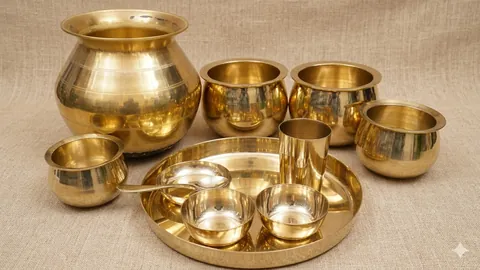
Brass, an alloy of copper and zinc, has been part of South Indian kitchens and pooja rooms for generations. Many families still prefer it for festival cooking, for the steady way a heavy brass vessel holds heat, and for pieces that are handed down rather than replaced. Brass meant for cooking is traditionally tin-lined, a coating known as kalai, because bare brass reacts with sour and salty food; looked after well, a brass vessel can serve a family for many years.
About the collection
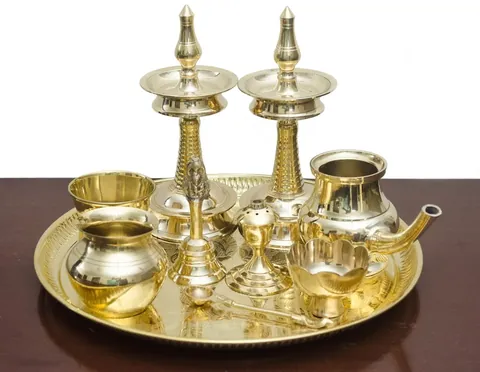
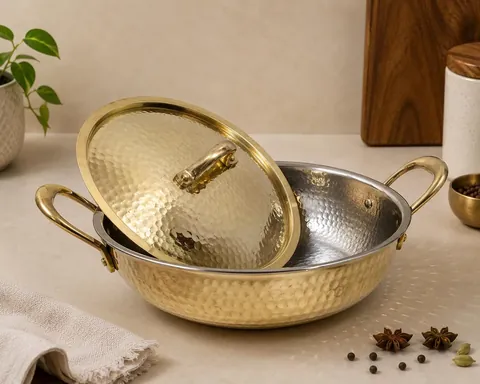
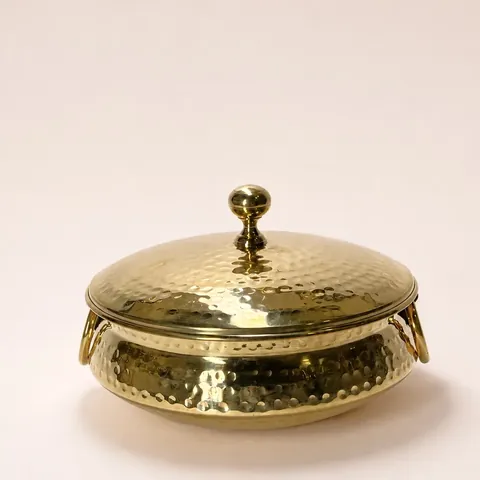
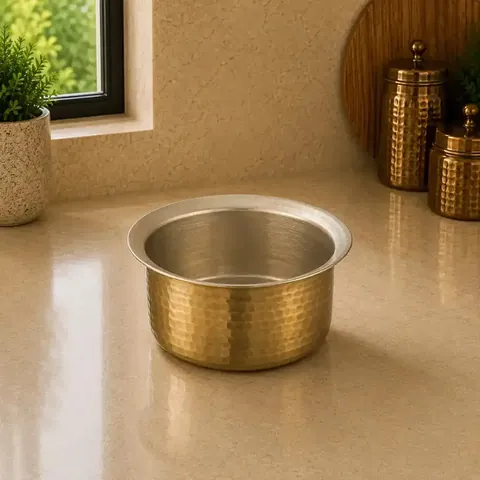
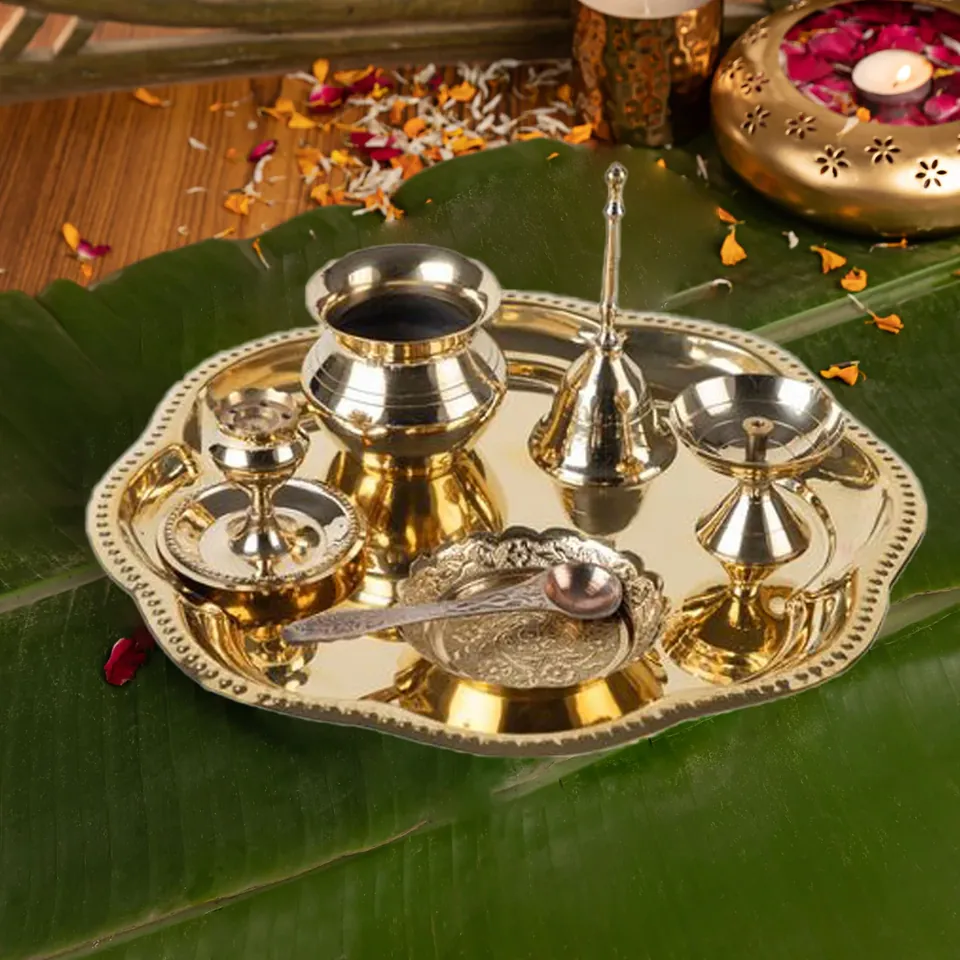
At our Sullurupeta showroom you will find the brass tope, a classic cooking pot, in numbered sizes from No. 7 to No. 18 and in plain or hammered finish, along with brass kadais in sizes No. 1 to No. 3, brass handis in plain and hammered finishes, and brass pooja sets in small, medium and large. Prices depend on size, finish and the current metal rate, so they are shared on request. Visit us opposite SBI Bank on Gandla Street, or WhatsApp +91 90807 22578 with the item and size you need.
Lift a few pieces of the same size and compare. Heavier brass with an even wall thickness holds heat more steadily and dents less easily, and a well-made vessel feels solid and balanced, with a smooth, even rim.
Topes and kadais are sold by number rather than by litres, so the easiest way to choose is to tell us how many people you usually cook for and compare the sizes side by side in the showroom.
Plain brass has a smooth surface that is quick to polish, while a hammered finish has a textured look that tends to hide small scratches. Both clean the same way: tamarind, or lemon and salt, followed by a thorough dry.
Questions
Brass is traditionally used for cooking, usually with a tin lining (kalai) on the inside. Bare brass reacts with sour and salty foods such as tamarind, tomato, curd and pickles, so cook those only in lined vessels and keep unlined brass for water and dry foods. Ask us whether a particular piece is lined before you buy.
Rub brass with tamarind pulp, or a paste of lemon juice and salt, then rinse and dry it straight away. For everyday washing, mild dish soap and a soft scrubber are enough. Avoid steel wool on hammered finishes, go gently on tin-lined interiors, and always dry thoroughly to prevent water spots.
Ramachandhraa Stores, at 8/2/160 Gandla Street opposite SBI Bank in Sullurupeta, carries brass topes, kadais, handis and pooja sets. The showroom is open Tuesday to Sunday from 9:00 AM to 9:00 PM. For a price, WhatsApp +91 90807 22578 with the item and size you want.
Ramachandhraa Stores · Sullurupeta
Visit us on Gandla Street, opposite SBI Bank, or send us a WhatsApp message with what you need — we will reply with sizes, finishes and today’s prices.