Cast Iron Cookware · 6 min read
How to Season and Care for Cast Iron Cookware
Season a new cast iron dosa tawa, kadai or paniyaram pan step by step, then learn daily cleaning, rust rescue and the habits that ruin seasoning.
By Ramachandhraa Stores, Sullurupeta · Updated

Quick answer
Season raw cast iron by scrubbing it, drying it on the flame and applying three or four very thin coats of oil, heating each until it smokes lightly. Pre-seasoned pans need only a rinse and one coat. After every use, wash without soaking, dry on the stove and wipe on a few drops of oil.
A well-kept cast iron dosa tawa or kadai can serve a family for decades, and what keeps it going is seasoning: very thin layers of oil heated until they harden into a smooth, dark coat bonded to the iron. That coat keeps rust away and helps dosas lift cleanly. It builds slowly with use, and if it is ever damaged, it can be rebuilt.
This guide covers first-use seasoning, daily cleaning, rust rescue and the habits that undo your work. The same routine suits every piece in our cast iron cookware range, from tawas and kadais to paniyaram pans.
Pre-seasoned or raw: check what you have
- Pre-seasoned pieces have a factory coat of oil already baked on. They look black and evenly finished, and the label usually says so.
- Raw cast iron looks dull grey, sometimes with a light protective coat of oil or wax from the maker. It rusts quickly if left wet and must be seasoned before you cook in it.
Not sure which you have? Check the label or ask us when you buy. Our cast iron comes from Prestige, Bergner and Stahl, and the box instructions are worth reading first.
First-use seasoning, step by step
Raw cast iron
- Scrub the pan with warm water, a little dish soap and a stiff brush to remove dust and any protective coating. Rinse well.
- Dry it with a cloth, then keep it on a low flame for a few minutes until every trace of moisture has gone.
- While it is warm, rub a very thin layer of oil over every surface, inside and out, including the handles. Groundnut, sunflower or gingelly oil all work. Wipe off the excess with a clean cloth until the pan looks almost dry; too much oil leaves a sticky surface.
- Heat the pan on a medium flame until it starts to smoke lightly. Keep it there for a few minutes, then switch off and let it cool on the stove. Open a window or run the exhaust fan.
- Repeat steps 3 and 4 three or four times. Each round adds a layer, and the iron turns darker and smoother.
Pre-seasoned cast iron
- Rinse with warm water, using a drop of mild soap if you like, and dry it on a low flame.
- Wipe on a thin coat of oil, heat it until it just begins to smoke, then let it cool.
- Start cooking. For the first few weeks, favour dishes with some oil, such as tempering, shallow frying and vegetable stir-fries, over boiling or long-simmered gravies.
Getting the first dosas right
Heat the dosa tawa on a medium flame until a sprinkle of water sizzles and vanishes almost at once. Lower the flame slightly and wipe the surface with half an onion dipped in oil before each dosa. If the first few stick, the seasoning is still young; a few more rounds of oil and regular use will fix it.
Daily cleaning
- Clean the pan while it is still warm, not piping hot.
- Rinse with hot water and scrub with a brush or soft scrubber. A little mild dish soap is fine on a seasoned pan.
- For stuck food, pour in a little water, let it boil for a minute or two and scrape with a wooden spatula. Coarse salt with a few drops of oil also makes a gentle scrub.
- Dry with a cloth, then put the pan on a low flame for a minute to drive off the last moisture.
- While it is warm, rub a few drops of oil over the cooking surface and wipe off the excess.
- Store it somewhere dry. If you stack pans, put a sheet of paper or a dry cloth between them.
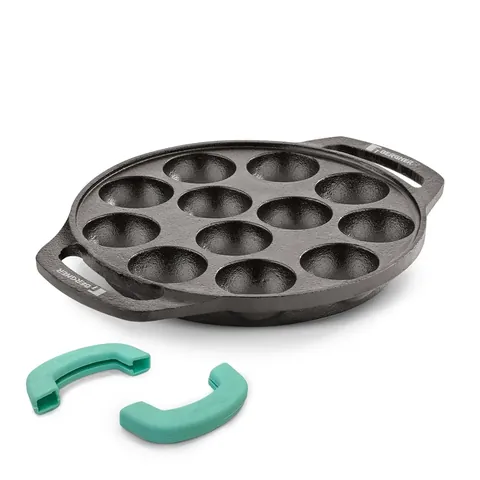
For a paniyaram pan, a small brush or a cloth wrapped around a spoon handle reaches into each cup. Oil each cup lightly after drying.
Rescuing a rusty pan
Orange spots mean the pan sat wet or was stored somewhere damp. Light rust is common and almost always fixable.
- Scrub the rusty patches with steel wool or a coarse scrubber until you see grey metal again.
- Wash with warm water and a little soap, rinse, and dry completely on a low flame.
- Re-season with two or three thin coats of oil, heating each until it smokes lightly, exactly as for a raw pan.
If a pan has a crack, stop using it. Cracks in cast iron can spread with heat.
What not to do
- Don't soak it or leave it in the sink overnight. Standing water causes rust quickly.
- Don't use a dishwasher. It strips seasoning and invites rust.
- Don't simmer sour gravies in a new pan. Long cooking with tamarind or tomato strips young seasoning and can give food a metallic taste. Once the pan is well seasoned, a quick tomato or tamarind fry is usually fine.
- Don't store cooked food in it. Move leftovers to a steel or glass container.
- Don't shock it. Pouring cold water into a hot pan, or setting a hot pan in water, can crack cast iron.
- Don't rush the heat. Cast iron heats slowly, so start on a low to medium flame and let it warm evenly.
- Don't drop it. Cast iron is brittle and can crack or chip on a stone floor.
- Don't over-oil. Thick coats turn sticky. If that happens, heat the pan on a low flame until the tackiness goes, or scrub and re-season thinly.
Choosing the right piece
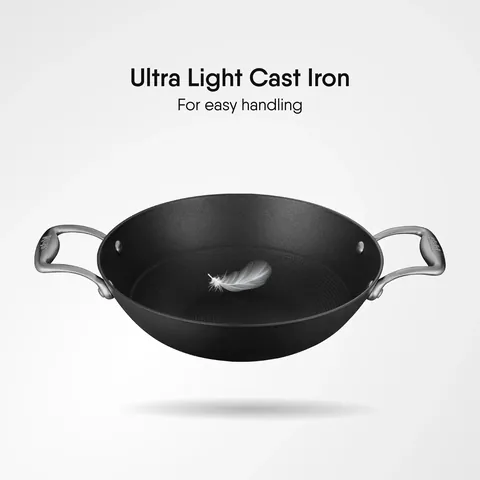
Weight matters as much as size. Heavier cast iron holds heat steadily and browns evenly, which helps when you make dosas one after another; lighter pieces heat up faster and are easier to lift and wash. Our cast iron kadai and fry pan run from 20 to 28 cm, and the dosa tawa comes in 28 and 30 cm with a single or double handle. Heavy versions are available in some sizes.
See them in our Sullurupeta showroom
The difference between a lightweight and a heavy tawa is easiest to judge in your hand. Visit Ramachandhraa Stores at 8/2/160 Gandla Street, opposite SBI Bank, Sullurupeta, Tuesday to Sunday from 9 AM to 9 PM, or WhatsApp +91 90807 22578 with any seasoning questions. Directions are on our visit page.